By Sarah Byron


By Sarah Byron
By: Dalia Perez


By: Dalia Perez
Women of color played a major role in the evolution of rock n roll but did not receive the recognition they truly deserved. These women have often been ignored and pushed aside when speaking about the story of rock n roll and instead white males have been placed at the center. I find this extremely insensitive since most of the time famous songs like “Hound Dog” by Big Mamma Thornton were often remanufactured by white male artists for the white population. These remanufactured songs often receive more popularity and were often identified as being the original version. Though in recent years “race-conscious feminist scholars have examined the involvement of women in a range of musical endeavors and explored the ways factors like race, class, and sexuality shape their experiences” (Mahon, 2011). This is important to acknowledge because feminist scholars are putting in the effort to create narratives for these women artist to prove they were part of the creation and evolution of rock n roll and to give them credit for being the original creators of songs that were stolen from them and remanufactured. The organization “Women Who Rock” has also put in the effort in exploring the role of women in a variety of music like rock n roll. This organization has joined together “scholars, archivists, musicians, media makers, performers, artists, and activists” (Habel-Pallán, Macklin, and Retman, 2014), to investigate the role of women in music like rock n roll. Overall, I believe that it is important to investigate the role women of color played in the music industry specifically they deserve recognition in the creation and evolution of rock n roll.
Two examples of songs that I believe prove that fact that women of color played a role in the evolution of rock n roll music are Etta James and Donna summer. These two women are known as two of the greatest Black female rock singers. The songs I chose are “Hot Stuff” by Donna Summer and “I’d Rather Go Blind” by Etta James. I chose these two songs because these are popular songs that prove that women of color played a role in the music industry in terms of rock n roll and these women deserve recognition.
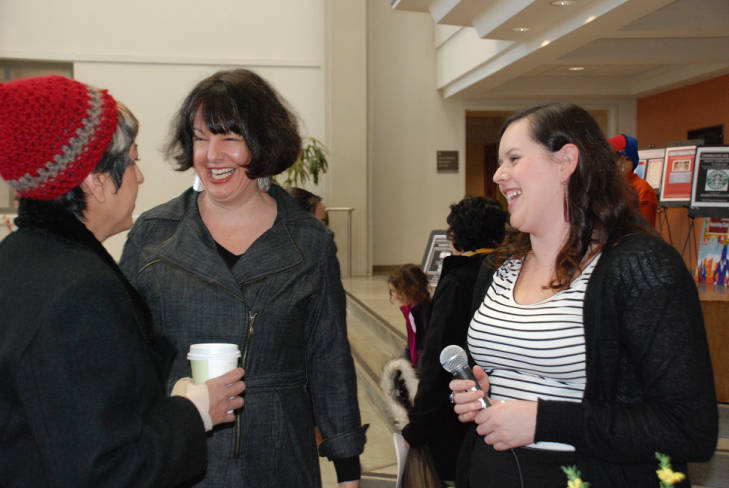

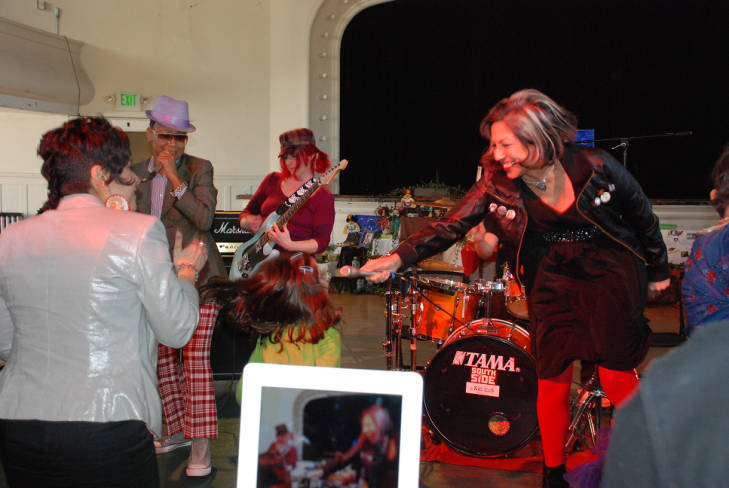
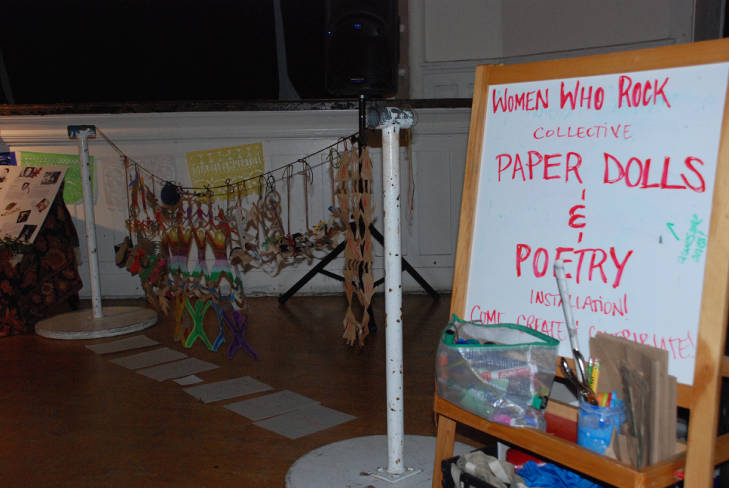
Women who rock aims to open the dialog of popular music to tell the stories of those excluded from the history. A quote that really stood out to me was when they were talking about the importance of the Archive. They said, “Medusa, the Angela Davis of hip hop, emphasized the importance of documenting the conference and collecting oral histories of women in music so that many more contributors can ‘add their voice and their muscle’ to the archive.” This really stuck in my mind when I was reading Mahons piece on Big Mama Thornton, she says “Thornton did not do any published autobiographical writing; as I listened to her music and learned about her life, I began to wish that she had. I wanted to find a way to get a stronger sense of the person behind that compelling voice.” (Mahon 3) This emphasizes the importance of having an archive like women who rock in order to have a better understanding and appreciation to the women who make the music we love. Many stories of women of color in music have gone untold, rewritten or in the case of Thornton she was “reduced to a symbol” (Mahon 4). Reshaping our conventional knowledge of popular music is one of the goals of the women who rock movement and I find this the most compelling claim, I’ve never thought about the history of popular music and reading about Big Mama Thornton and how her songs hound dog and ball and chain were essentially gentrified and stolen it made me frustrated that this story was not told more often.
Two song I would like to connect to the readings we did are George Harrisons My Sweet Lord plagiarized The Chiffons He’s So Fine and Peter Hook admitted that New Order stole Blue Monday off Donna Summer’s Our Love. These are songs from women of color who were stolen and made famous by a white person. This is important to talk about and to let the original artist get credit. I hope that through the women who rock archive these artists will get the credit they deserve and that one day it would lead to them actually getting the money and recognition that they deserve. Giving voice to those who have been pushed aside is can hopefully lead to others can have the confidence to also do so as Medusa hopes.
-Felicity Linville
The role women have historically played in the evolution of the music industry is fascinating to document, since they were often very criticized for stepping away from tradition western expectations. “Big Mama” Thornton was very influential in her refusal to conform to societal norms, where her confidence as a performer made her very threatening. “…The ways she challenged the primacy of men in a male-dominated arena, marking her as a dangerous woman.” (Mahon, 2011) This is important to note, as women, especially women of color, have been facing an uphill battle to gain representation and respect in the music industry. This is also discussed throughout Women Who Rock, a history archive appreciating the challenges women have faced in the music industry. Their mission statement says they “bring together scholars, musicians, media-makers, performers, artists, and activists to explore the role of women and popular music in the creation of cultural scenes and social justice movements in the Americas and beyond.” (Habel-Pallán, Macklin, and Retman, 2014) Both these readings highlight the lack of recognition that women have gotten throughout the music’s history, when they are responsible for much of the progress to where we are today.
An example of such empowering pleas for recognition can be found in Aretha Franklin’s “Respect,” (https://www.youtube.com/watch?v=6FOUqQt3Kg0) which represents an anthem to the masses strengthening the momentum of the civil rights and feminist movements. Also, “You Don’t Own Me” by Lesley Gore (https://www.youtube.com/watch?v=vNb-8gLcXLs) is another tale of caution for controlling men, and empowerment for neglected women everywhere, inspiring women to represent themselves proudly and confidently.
Works Cited
Habell-Pallán, Michelle, et al. “WOMEN WHO ROCK.” ::: Federal Emergency Relief Administration (FERA) Collection ::: 2014, content.lib.washington.edu/wwrweb/.
Mahon, Maureen. “Listening for Willie Mae ‘Big Mama’ Thornton’s Voice: The Sound of Race and Gender Transgressions in Rock and Roll.” Oral History Review, Oxford University Press, 16 Nov. 2011, muse.jhu.edu/article/457048/.
Kira Smith
Dalia Perez
By Sarah Byron


 AFRAM337